
Autoflower Light Schedule: 18/6 vs 20/4 vs 24/0 (Which Is Best?)
18/6, 20/4 or 24/0 for autoflowers? What each schedule costs, what it returns, and the one that suits almost every home grow.
By Autoflower.net Editorial Team · Last reviewed 2026-10-13
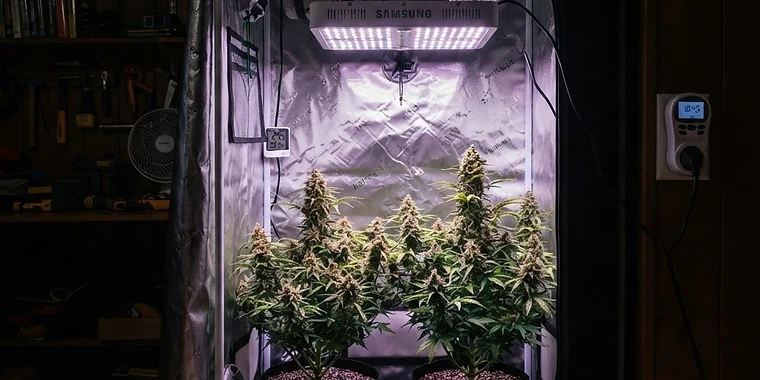
18/6 is the best default autoflower light schedule for most growers: 18 hours of light and 6 of dark. It grows fast, healthy plants at a sensible power cost. 20/4 is the performance option when you are paying for speed; 24/0 is a legitimate choice that rarely pays for itself at home. This page compares the three so you can pick once and stop thinking about it.
Autos flower by age, not day length, so the schedule question is purely about growth rate and cost - there is no flowering trigger to manage, unlike photoperiod plants (see what makes autoflowers different).
The three schedules compared
| Schedule | Growth speed | Power cost | When it makes sense | |---|---|---|---| | 18/6 | Strong | Moderate | The default for almost everyone | | 20/4 | Slightly faster | Higher | Speed-focused growers, cheap electricity | | 24/0 | Fastest on paper | Highest | Some commercial setups; rarely home grows |
Why 18/6 is the sensible default
Plants photosynthesize in light and respire around the clock, so a dark period is not wasted time - it is when the plant processes what it made. Growers on forums report healthy, dense bud on 18/6, and the ILGM light schedule guide frames 18/6 as the common recommendation with 20/4 as the faster-growth alternative. Six dark hours also drop leaf-surface temperature and give your electricity bill a break, which matters for a light that runs 10 to 12 weeks straight.
20/4: the middle path
Twenty hours of light adds roughly 11 percent more light time than 18/6. In practice growers report modestly faster veg, not dramatic yield differences, because yield is driven by total light energy (intensity x time) more than by schedule shape. If your panel is strong and your power is cheap, 20/4 is a reasonable upgrade; if not, 18/6 loses little.
24/0: works, rarely worth it
Autos tolerate continuous light, and some commercial growers run it. But community experience and the respiration argument both suggest diminishing returns: forum threads on the question typically report 24/0 not outperforming 18/6 enough to justify the higher power draw and constant heat. If you run 24/0, watch for leaf-tip heat stress and consider dropping to 18/6 if the plant wilts late in the light day.
Light intensity matters more than schedule
The schedule sets how long the light is on; the light's strength sets what each hour is worth. Practical targets commonly used by growers (breeder guidance, not guarantees): roughly 200 to 500 µmol/m²/s PPFD in veg, higher through flower, with a dimmer or increased hanging distance to control intensity. A weak panel on 24/0 grows a slower plant than a strong panel on 18/6.
Setting it up
- Pick 18/6 (or 20/4 if you have reasons) on day one.
- Put the panel on a timer - consistency beats cleverness, and a missed manual switch is how photoperiod habits bite.
- Set distance for seedlings (farther) and adjust weekly by observing: leaves reaching up want more light, bleached or folding leaves want less.
- Keep the schedule identical through veg and flower - no flip, ever.
Related guides
- The complete autoflower grow guide - where lighting fits in the full timeline.
- How to grow autoflowers - the beginner overview.
- Autoflower flowering stages - what happens after veg, on the same schedule.
Frequently asked questions
What is the best light schedule for autoflowers?+
18/6 is the sensible default for most home growers: strong growth, healthy plants and a reasonable power bill. 20/4 can add a little growth speed for a bit more cost; 24/0 works for autos but rarely pays for itself in a home setup.
Do autoflowers need darkness?+
No, they do not need darkness to flower, and 24/0 is a legitimate schedule. The debate is about efficiency: plants respire at night, so some light hours convert less efficiently. Many growers still prefer a dark period for plant health and power costs.
Can I switch my autoflower to 12/12?+
You can, but you should not want to. Reducing light below 18 hours removes energy the auto needs for its fixed clock. 12/12 is a photoperiod flowering trigger, not an autoflower requirement.
Does the light schedule affect when my autoflower flowers?+
Not the start of flowering - autos flower by age. Light strength and consistency affect how much the plant accomplishes before and during flowering, which changes size and yield more than timing.
Written by the Autoflower.net Editorial Team. Information on this page is educational and does not replace strain-specific breeder guidance. Laws on cannabis cultivation vary by jurisdiction — check your local rules before growing.