
Autoflower Flowering Stages: What Happens Week by Week
The autoflower flowering stage week by week: pre-flower signs, the stretch, bud stacking and ripening, with feeding cues and fixes for slow or stalled flowering.
By Autoflower.net Editorial Team
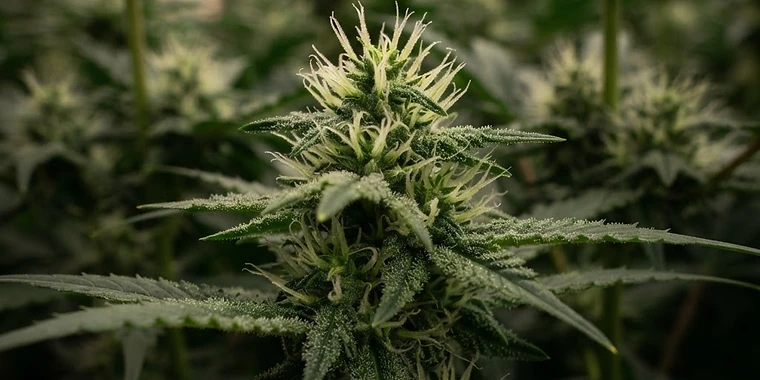
Autoflowers start flowering around weeks 3 to 5 from germination with the appearance of white pistils, then build buds through a stretch phase, stack flower from about week 5 or 6, and ripen until trichomes mature - typically between weeks 8 and 12. This guide walks the flowering stage week by week and covers the troubleshooting that keeps it on track.
There is no light change to make, unlike with photoperiod plants: the plant flowers on its own clock. Your job during flowering is feeding, environment and restraint.
Week 3-5: Pre-flower and the stretch
Flowering announces itself with stigmas (white hairs) at branch tips - the first unmistakable sign. Around the same time the plant enters a growth spurt, stretching upward and outward before committing to buds.
What to do:
- Shift feeding toward higher phosphorus and potassium (P-K) and taper nitrogen. Our nutrient plan has the week-by-week ratios.
- Finish any training now. Low-stress training after the stretch has begun wastes the plant's remaining vigour, and topping at this point is a mistake.
- Start lowering humidity toward 45 to 50 percent if your setup allows, since dense buds plus humid air invite mould.
Week 5-6: Bud sites multiply
Pistils multiply across the canopy and calyxes begin swelling. Buds are still airy and light; smell develops sharply. Trichomes start forming but are not yet obvious without magnification.
What to do: keep feeding on the flower schedule, keep the canopy open, and resist the urge to defoliate heavily - a few leaves shading bud sites is all that needs removing.
Week 7-8: Buds stack and resin builds
Buds thicken visibly and trichome production becomes obvious: glands sparkle across the calyxes and small leaves. This is the stretch's opposite - vertical growth has essentially stopped and the plant converts energy into flower mass.
What to do:
- Support heavy branches with stakes or soft ties before they snap; dense tops on a compact auto are surprisingly heavy.
- Check leaf colour for early ripening signals: some yellowing of lower leaves is normal senescence, but our yellow leaves guide helps distinguish that from deficiency.
- Begin checking trichomes weekly with a loupe, though harvest is still weeks away for most strains.
Week 8-11: Ripening and the harvest window
The breeder's countdown is now almost meaningless - the plant itself calls the date. Pistils darken and curl inward, calyxes swell one last time, and trichomes transition from clear to milky to amber. Mostly-milky with a minority of amber is the common target for a balanced effect; more amber trends toward a heavier body effect.
What to do: flush or taper feeding per your nutrient approach, check trichomes every couple of days, and harvest in the window your tolerance goals suggest. Our trichome guide explains when to harvest in detail; drying and curing follow in the drying room blueprint and curing guide.
Autoflower flowering stage at a glance
| Weeks (from sprout) | Stage | Your main jobs | |---|---|---| | 3-5 | Pre-flower, stretch | Switch to P-K feed, finish training, reduce humidity | | 5-6 | Bud sites multiply | Keep feeding, light defoliation only | | 7-8 | Buds stack, resin builds | Support branches, start trichome checks | | 8-11 | Ripening | Trichome checks every 2 days, harvest on maturity |
Breeder timelines broadly agree on the shape: Fast Buds' flowering walkthrough marks stigmas around week 5, abundant hairs by week 6 and calyx fattening by week 8, while Auto Seeds' life-cycle guide places first flowering signs at weeks 3 to 5. Individual strains run earlier or later - sativa-leaning autos commonly add 1 to 3 weeks.
Troubleshooting slow or stalled flowering
- No pistils by week 5: check light first - weak light delays everything. Then check for stress: cold, overwatering or damage in weeks 1 to 4 slow the start. The plant will still flower; autos cannot be held back indefinitely.
- Pistils keep browning early with airy buds: often a sign of heat or light stress during early flower; verify leaf-surface temperature and light distance.
- Buds stay small at week 8 with plenty of white pistils still growing: normal for late strains. New white pistils late in flower usually mean the plant is still building - let it finish on trichome evidence, not on the calendar.
- Fuzzy grey growth inside dense buds: bud rot, an emergency - see our fungal disease guide before it spreads.
For the stage in the context of the whole life cycle, see the complete autoflower grow guide, and for what the finished timeline looks like, how long autos really take.
Frequently asked questions
When do autoflowers start flowering?+
Most autoflowers show their first white pistils between weeks 3 and 5 from germination. The shift happens on the plant's internal clock, so no change to the light schedule is needed.
How long is the autoflower flowering stage?+
From first pistils to harvest, typically 5 to 8 weeks depending on the strain. Sativa-leaning autos sit at the long end; 9-week total autos can flower in as little as 4 to 5 weeks.
What do autoflowers look like when they start flowering?+
White hair-like stigmas appear at branch tips, followed by a stretch in height. Within a week or two, small bud sites form and the characteristic cannabis smell develops.
My autoflower is not flowering at week 5 - what should I do?+
Check light strength and stability first, then rule out stress from cold, overwatering or early damage. Autos flower on age, so a healthy plant will start; persistent delay usually traces back to weak light.
Written by the Autoflower.net Editorial Team. Information on this page is educational and does not replace strain-specific breeder guidance. Laws on cannabis cultivation vary by jurisdiction — check your local rules before growing.