
Why Are My Auto's Leaves Turning Yellow?
Where the yellow shows tells you the cause: ripening, nitrogen, pH lockout, overwatering or burn. A diagnosis order that actually works.
By Autoflower.net Editorial Team
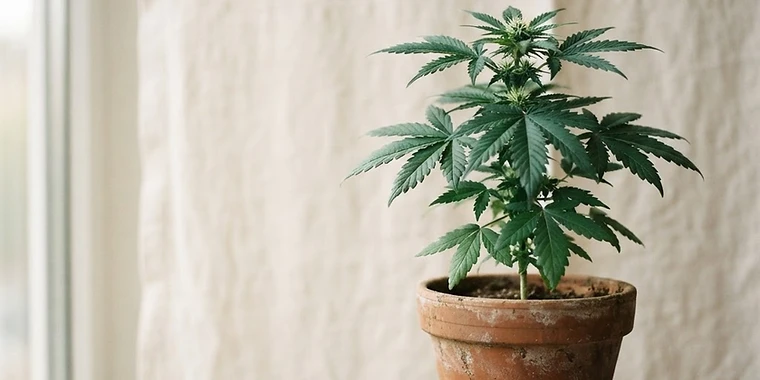
A yellow leaf sends every new grower to the forum in a panic, and the forum sends back five different diagnoses. The truth is that yellowing is a symptom, not a disease, and the diagnosis starts with a question the plant answers plainly: where on the plant is the yellow, and when is it happening? Work through this guide in order and you'll narrow almost any case to a cause in a few minutes.
Start here: lower leaves, final weeks
If your auto is two-thirds of the way through flower and the lowest fan leaves are yellowing evenly, put the spray bottles down. This is ripening, not sickness. The plant is withdrawing nitrogen from its old leaves to feed the buds, and every serious grower lets it happen. Interfering with extra feeding at this stage does more harm than good; the harvest gains nothing and the smoke picks up residual salts. Fan leaves yellowing from the bottom up in the last two weeks is the plant behaving exactly as designed.
Lower leaves early in the grow: nitrogen
Yellowing that starts at the bottom and climbs, with leaves fading evenly all over before they drop, points to nitrogen hunger. Autos hit this most often in coco, or in soil past week five when the mix's reserves run dry. The fix is modest: a slightly stronger dose of your grow nutrient at the next feeding. Don't dose heavily, because the plant only needs a nudge, and overcorrecting nitrogen in an auto leads straight to clawed, dark leaves a week later.
Yellow between the veins: magnesium, iron, or pH
When the tissue between the veins yellows while the veins themselves stay green, the pattern narrows to two candidates. On older and middle leaves, it's usually magnesium, which shows up surprisingly often under modern LED lighting; a teaspoon of Epsom salts per litre as a foliar spray fixes it within days. On the newest growth at the top, it's usually iron.
Here's the part that saves you money: both of these elements are usually present in the medium, and the real problem is that the root zone pH has drifted out of the range where roots can absorb them. Before buying anything, test the pH of your feed and your runoff. Soil wants 6.0 to 7.0, coco and hydro want 5.5 to 6.5, and correcting a drift fixes the "deficiency" without adding a single supplement. The pH and EC guide covers the whole procedure.
Droopy and yellow all over: water
Leaves that yellow while hanging limp and heavy point to overwatering, the most common problem in autoflowers full stop. Autos in large pots stay wet for days, and roots sitting in saturated soil shut down and then rot. Lift the pot before every watering; a light pot wants water, a heavy one doesn't, regardless of what the calendar says. Water less often and more thoroughly, and let the top few centimetres dry out between drinks.
Yellow with burnt, crispy tips: overfeeding
Burnt tips paired with yellowing or with dark, clawed growth means nutrient burn or salt build-up. Flush the pot gently with two or three times its volume of pH-corrected water, then resume feeding at roughly half your previous strength. If the tips burn while growth stays green and healthy, you're close to the ceiling; if the plant looks starved too, your pH is probably locking nutrients out instead, and the flush should be your first step rather than a dose reduction.
Spots and patches, not overall yellow
Brown or rust-coloured spots surrounded by green usually indicate calcium or magnesium trouble. Yellowing with brown edges late in flower is often simple potassium hunger, which is normal to meet in bud-building weeks. Either way, the leaf-by-leaf deficiency guide matches every pattern to its fix, and the feeding guide explains how to stay out of trouble in the first place.
The two-minute checklist
- Check the pH of your feed and your runoff first, every time.
- Lift the pot. Soggy soil explains more yellow than any deficiency does.
- Feed at quarter to half strength and only when growth is steady.
- Raise your light if leaves curl upward or bleach.
Still stumped after all that? The AI Plant Doctor in this app diagnoses a photo in seconds. Snap a picture of the affected plant, tell it what you've been feeding, and let it cross-reference the pattern for you. It catches the cases that don't fit the textbook, and it's free to use.
Written by the Autoflower.net Editorial Team. Information on this page is educational and does not replace strain-specific breeder guidance. Laws on cannabis cultivation vary by jurisdiction — check your local rules before growing.