
The Micronutrients: Small Doses, Big Jobs
Iron, manganese, zinc and the rest of the trace elements. Why shortages are rare, what causes them, and how to read the ones that appear.
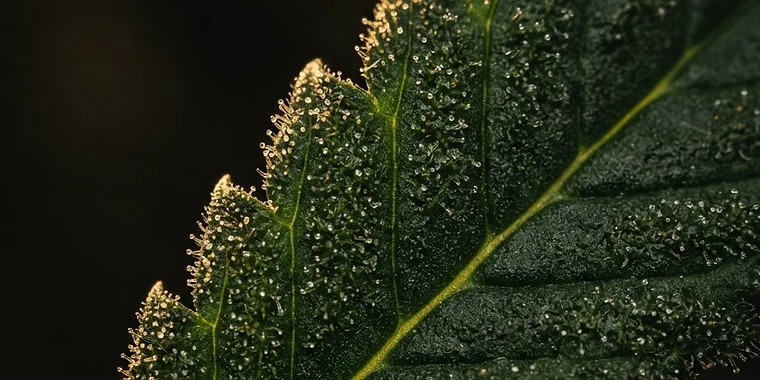
NPK gets the billboards, but a cannabis plant runs on a longer ingredient list. Iron, manganese, zinc, boron, copper, molybdenum and chlorine are needed in amounts measured in parts per million, and every one of them is essential. Remove any single one and the plant eventually stops growing, however perfectly you feed the macros. The good news is that these shortages are rare in a healthy grow. The bad news is that when one appears, it usually means something in your system has quietly gone wrong, and the element is the symptom rather than the cause.
Why micro problems usually aren't micro problems
Quality soil mixes, well-built organic amendments, and complete nutrient lines all carry their full trace payload. So the elements themselves are almost never missing. What actually happens in the grows where micro deficiencies show up is one of three things. The root zone pH has drifted and locked a specific element out. Or the medium is nearly sterile, which is the case in coco coir and in gardens watered exclusively with reverse-osmosis filtration. Or the pot has been waterlogged so long that roots, even surrounded by nutrients, can't take anything up. Diagnose those causes first and the deficiency usually clears without a single bottle of trace mix.
The three you'll actually meet
Iron tops the list of real-world sightings, and it earns the spot honestly. It's central to chlorophyll formation, and it is immobile, meaning the plant cannot redistribute it. So iron shortage yellows the youngest leaves between the veins while the veins themselves stay green. Magnesium shortage looks identical, with one decisive difference: it hits old growth first, because magnesium is mobile. New leaves yellow means iron; old leaves yellow means magnesium. And since iron availability collapses above pH 7, the fix is more often a pH correction than added iron. When you do need to supply it, look for a chelated form such as Fe-EDTA, which stays plant-available across a wider pH band.
Manganese sits inside the water-splitting reaction that powers photosynthesis itself, and it also activates a raft of enzymes. Its deficiency resembles iron's, interveinal yellowing on young and middle growth, but it carries a calling card: mottling that develops into tan dead spots as the shortage deepens. Worth knowing, too, is that excess iron can induce a manganese shortage, which is one more argument against pouring supplements at guesses.
Zinc governs production of the plant's growth hormones. A zinc-starved auto presents the tell-tale combination of stunted height, unusually narrow new leaves, and yellow banding between the veins. It's also the trace element most likely to run short in soils pushed hard with phosphorus, because P and Z suppress each other, so a zinc problem in a heavily boosted grow usually means the booster was the mistake.
The rare ones
Boron manages cell-wall construction at the growing tips, and the distance between its deficient and toxic doses is the widest of any element. Too little gives thick, brittle, cracked new growth, hollow stems and aborted bud sites; too much burns leaf tips nearly as fast. This is precisely why boron should only ever reach your plants as a component of a complete blend, never dosed on its own. Copper activates enzymes, contributes to stem strength, and plays a quiet role in flavour development, though shortages are almost theoretical outside sterile hydro. Molybdenum is needed less than almost anything else on the list, yet it holds a unique job: it makes nitrate digestible. Without it the plant can absorb nitrate but not process it, and older leaves yellow with curled, burnt-looking edges. Amusingly, molybdenum availability rises with pH, the exact opposite of iron's behaviour, which is the strongest argument there is for keeping the root zone mid-range rather than swinging it around. Chlorine is needed so sparingly that any tap water covers it. Ignore it entirely.
Silicon, the honourable mention
Silicon isn't formally essential, but it has become the supplement world's most defensible maybe. Plants supplied with silica build thicker stems, stiffer leaves that hold LED light at a better angle, and measurably tougher resistance to heat, drought and spider mites. It works by accumulating in tissue over time, which means it only pays if you start early. A rescue dose in week six does nothing. If you run a high-light indoor room, a mono-silicic acid product from seedling onward is a quiet, legitimate edge.
The practical takeaway
You don't feed micronutrients so much as avoid losing them. Run a complete nutrient line or a properly built soil, hold your pH in range, and treat single-element rescue dosing as a last resort, because in trace-element work the cure is more dangerous than the disease. When something does go wrong, read the leaf first with the deficiency guide, check the root zone with the pH walkthrough, and only then reach for a bottle.