
The Best Light Schedule for Autoflowers
18/6, 20/4 or 24/0? What each autoflower light schedule costs, what it returns, and the one that suits almost every grow.
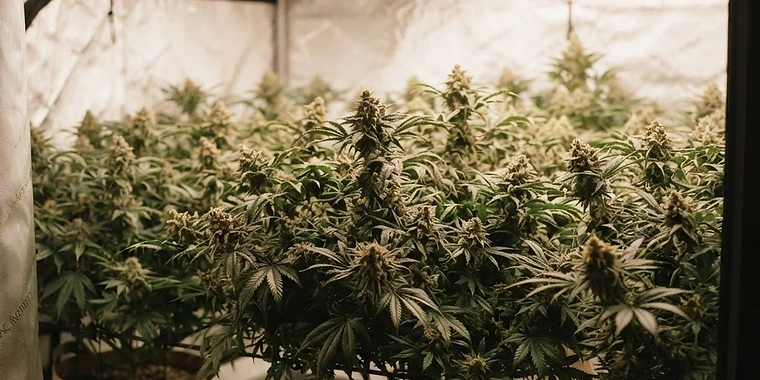
Because autoflowers flower by age rather than by daylight, one light schedule carries them from seed to harvest. No flip, no dark period, no timer anxiety. The only decision left is how many hours a day to run, and growers have settled into three camps. Here's what each one costs and returns.
18/6: the default for a reason
Eighteen hours of light and six of dark is where most growers land, and most of them should. It delivers the large majority of the growth a plant can physically use, keeps electricity costs sane, and gives the dark period real work to do. During those six hours leaf temperatures drop, the root zone catches up, and the plant runs its recovery and repair routines undisturbed. Tents on 18/6 are also simply easier to keep in the right temperature band, especially in warm rooms or summer grows.
If you're unsure, or this is your first auto, run 18/6 and spend the difference in attention elsewhere. Yield difference against longer schedules is smaller than most growers assume, and it's routinely erased by better watering and feeding.
20/4: the performance option
Four hours of dark instead of six gives you roughly ten percent more total light hours, and in a well-built tent with a strong LED it can translate into slightly faster growth and a modest yield bump. The costs are real, though: more heat to move, a higher power bill, and a smaller margin for equipment problems, since a cooling failure during a 20-hour run has less dark time to recover in. This schedule suits growers with solid ventilation who have already run a few crops and know their space holds temperature.
24/0: the one to argue about
Some growers run lights around the clock and swear by it. The science says total light is the strongest driver of growth, so on paper 24/0 wins. In practice the gains are the smallest of the three options, the power cost is the highest, and plenty of growers report leaf-tip issues and general stress that they don't see at 20/4. The old claim that continuous light causes hermaphroditism in autos doesn't hold up, but neither does the claim that 24/0 is a free 20 percent. Treat it as an experiment for a later grow, not a first choice.
Think in total light, not hours
The number that actually predicts your harvest is the daily light integral, or DLI: how much usable light the canopy receives in a full day. A strong light run 18 hours beats a weak light run 24 hours, every time, and a mid-strength lamp pushed too close bleaches leaves instead of adding bud. Before you agonise over schedules, make sure intensity is right for the stage:
- Seedling: gentle light, lamp raised high or dimmed low
- Weeks 2 to 4: ramp intensity up as the plant fills out
- Flower: full strength, watching leaf tips for bleaching and for leaves curling upward at the edges
If you want to go deeper on the why, the autoflower basics guide covers how autos read light differently from photoperiods.
Two small advantages worth knowing
Dark periods create decisions, and autos remove most of them. Light leaks don't matter: a glowing router or an imperfect tent zip won't stress an auto, because it isn't counting darkness. And interrupted nights, a door opening, a torch sweep during the dark hours, cost nothing at all. Photoperiod growers spend real money and worry protecting their dark periods. You get to skip that entirely.
The verdict
Run 18/6 as the foundation. Move to 20/4 only when you have temperature control and want to chase the last few percent. Leave 24/0 for curiosity. And remember that schedule is the third-most-important lever in an auto grow, behind light intensity and feeding discipline. Growers who obsess over the first two and stop fiddling with the third harvest better weed than the ones who do it the other way around.