
Living Soil: The Organic Path to Top-Shelf Flower
Why are organic growers mixing 'super soil' and barely feeding at all? Inside the living-soil method — the soil food web, the classic recipe, and why less work can mean better weed.
By Autoflower.net Editorial Team
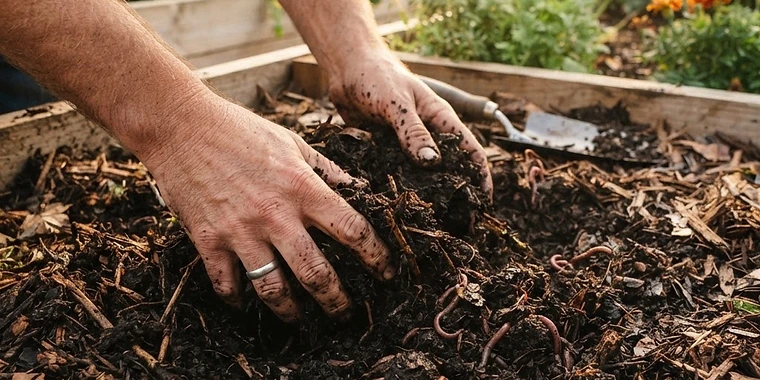
Somewhere in every growing community there's a grower who barely waters, never measures a nutrient, and somehow produces the frostiest, tastiest jars in the room. Their secret isn't luck — it's living soil, the organic method where you feed the soil and billions of microbes feed the plant. It's old-world gardening, and it's having a huge modern renaissance among cannabis growers. Here's how it works and how to try it.
The Soil Food Web, in One Minute
Conventional growing puts salts directly on the roots: feed, absorb, repeat. Living soil instead hosts an ecosystem — bacteria, fungi, protozoa, beneficial nematodes, and worms — that decomposes organic matter into nutrients and delivers them on demand. Plant roots actively court this web, exuding sugars to recruit exactly the microbes they need. The result is buffering: nutrients are released gradually, pH self-regulates, and mistakes are absorbed rather than punished. In living soil, overfeeding is almost impossible and underfeeding is slow to appear.
The Classic Base Recipe
The famous 'super soil' blueprint builds a bed of roughly:
- 40% quality organic potting soil (the base)
- 30% compost or well-rotted worm castings (the life and the nitrogen)
- 20% aeration: perlite, pumice, or rice hulls (roots need oxygen)
- 10% amendments that carry the harvest: a balanced blend of kelp meal, alfalfa meal, neem or karanja cake, crustacean meal, and a dusting of rock dust for trace minerals
Mix it, moisten it, and — the step everyone skips — cook it for 3–4 weeks. The initial microbe population needs time to break the amendments into plant-available form. Fresh-mixed super soil can run hot and yellow your seedlings; cooked soil is gentle enough to carry an autoflower seed to harvest in the same pot with nothing but water.
Water, Mulch, and Patience: The Whole Job
Daily life in living soil is almost embarrassingly simple:
- Water with dechlorinated water (let tap water sit out overnight, or use a carbon filter — chlorine kills the web you paid to build).
- Mulch the top with straw or barley to keep moisture even and feed the topsoil fungi.
- Topdress a spoonful of compost or worm castings every 3–4 weeks — that's the entire feeding schedule.
- Brew if you like: a molasses-and-compost tea occasionally adds a microbe boost, especially mid-flower.
No pH pens, no EC meters, no supplement arithmetic. The web handles pH and buffering for you.
The Autoflower Fit
Living soil suits autos remarkably well: autos hate transplanting, so a seed planted directly in a large cooked-soil pot with zero feeding interruptions matches their do-not-disturb personality perfectly. The classic move is a 10–15 litre pot of cooked super soil, one seed, water only — the simplest legitimate grow schedule that exists.
Realistic Expectations
Honesty time: living soil yields can trail salt-feeding by a modest margin, and the upfront mixing costs more than a bottle of bloom food. What you buy back is flavour and depth — terpene expression in well-built living soil is a running obsession among competition growers — plus enormous forgiveness for beginners. Your first living-soil grow will teach you patience; your third will be the one you brag about.
Start with one pot alongside your regular grow. Cook the soil, plant a seed, water it, and watch what a functioning ecosystem does with two months and nothing but water.
Written by the Autoflower.net Editorial Team. Information on this page is educational and does not replace strain-specific breeder guidance. Laws on cannabis cultivation vary by jurisdiction — check your local rules before growing.