
The Drying Room Blueprint: Temperature, Humidity and Airflow
The seven to ten days after harvest decide half your final quality. Build a drying space that holds 60/60, and your cure starts before the jars do.
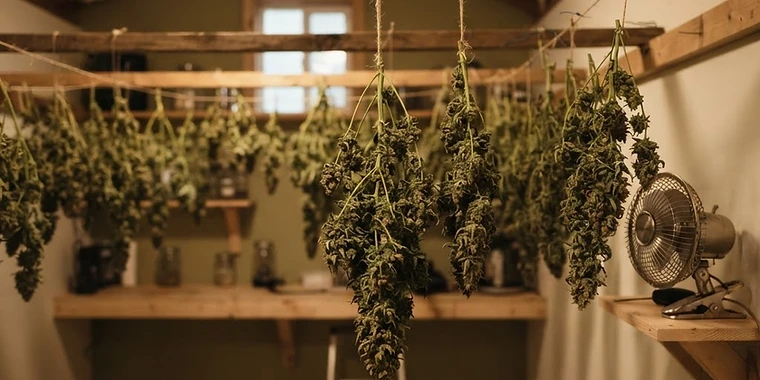
Harvest day feels like the finish line, but it's the start of the most quality-sensitive week of the entire grow. Drying too fast bakes chlorophyll into the bud and gives that hay-flavoured smoke no cure can fully rescue. Drying wrong also robs terpenes before the jars ever see them. The good news: a great drying space needs almost no gear — just three numbers held steady.
The Three Numbers: 18–20°C, 60% RH, Darkness
Professional drying rooms converge on the same recipe: 18–20°C (64–68°F), 55–60% relative humidity, and total darkness. Cool and humid slows water loss just enough that the plant's own enzymes finish their work while moisture leaves evenly. Warm, dry rooms (the classic garage-in-summer mistake) dry the outside of the bud long before the inside — trapping chlorophyll inside a crunchy shell.
The target pace is 7–10 days until small stems snap cleanly rather than bend. Faster than five days means your room is too warm or too dry; slower than fourteen invites mold.
The Two Drying Styles
- Whole-plant hang: chop the plant at the base and hang it upside down. Slowest, most even drying, and the traditional choice. Works beautifully for autos since most are a single plant.
- Branch hang: cut branches individually and hang them spaced apart. Better airflow in humid conditions or crowded spaces, and you can pull smaller pieces out as they finish.
Wet-trimming (trimming before drying) dries significantly faster and fits small humid apartments; dry-trimming after the hang protects trichomes better and suits low-humidity homes. Both produce excellent weed — consistency matters more than method.
Setting Up a Drying Space Anywhere
You don't need a dedicated room. A spare closet, a large cardboard box, a small tent, or a wardrobe all work. The requirements:
- Air movement without wind. A small fan circulating air past the plants — never blowing at them — prevents stale pockets and mold. Point it at a wall.
- A way to dehumidify. In dry climates or winter heating, a damp towel or a tray of water in the box slows the room down. In humid climates, a small dehumidifier or silica packs earn their price.
- A hygrometer inside the space at bud height. You're managing the room, not the thermostat in the hallway.
- Darkness. UV degrades cannabinoids; a dark closet is ideal. If light is unavoidable, keep it indirect.
A small tent with a fan and a passive vent makes a superb drying chamber — and the same tent, minus the hang, is your curing staging area afterward.
The Winter and Summer Problem
Winter: heated homes sit at 30–40% RH — brutally drying. Counter with the wet-towel trick, a sealed box (less air exchange), and whole-plant hangs to slow things down.
Summer: a hot room hits 27°C+ and dries buds in four flat days. Move drying to the coolest room in the house, run drying at night, or add a small portable dehumidifier. If the stems snap on day five, intervene — that's not a brag, that's a defect.
Exit Criteria: When Jars Take Over
Move to curing when: small stems snap rather than fold, buds feel dry outside but slightly dense within, and the outer leaf no longer feels damp by touch. Typically day 7–10. Then it's into glass jars at roughly 62% RH for the slow, rewarding half of the process.
Get the drying room right and the cure almost runs itself. Get it wrong and no amount of burping buys the flavour back. Three numbers, a fan, and a dark corner — that's the whole blueprint.