
Know When to Chop: Reading Trichomes Like a Pro
Clear, cloudy, or amber — the trichome colour code decides your high. Here's exactly how to check, when to harvest, and why the breeders' week number is only a suggestion.
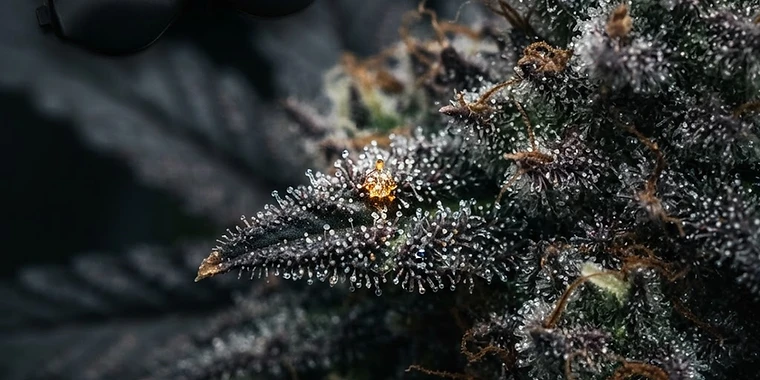
Every grower faces the same terrifying moment: the plant looks done, but is it? Chop a week early and you harvest sparkly, racy, half-developed potency. Wait too long and the couch-lock settles in while bright flavours fade. The plant can't talk — but it paints. Learning to read trichomes is the difference between guessing and knowing.
What Trichomes Actually Are
Trichomes are the tiny resin glands coating buds and sugar leaves — mushroom-shaped factories that produce cannabinoids and terpenes. Under magnification each one is a tiny stalk with a bulbous head, and that head is the harvest report. As the plant matures, the resin inside shifts from clear to cloudy to amber, and each stage changes the effect.
The Colour Code
- Clear: resin is still being produced. THC is present but the head hasn't matured. Harvest now and you get the weakest, most jittery result of the plant's life. Clear trichomes are a 'keep waiting' sign.
- Cloudy / milky: the peak-production window. THC content is at or near maximum and the effect is bright, cerebral, and energetic. Most growers harvest when the vast majority of trichomes are cloudy.
- Amber: the THC is beginning to degrade toward CBN, a heavier, sleepier compound. Amber trichomes bring body, relaxation, and that heavy-limbed quality. Some amber is desirable for evening strains and insomnia relief; too much and effects go flat and foggy.
The classic targets: a daytime, focus-friendly harvest is mostly cloudy with 5–10% amber. A nighttime, body-heavy harvest waits until 15–30% amber. There is no wrong answer — only your answer.
How to Actually Check
- Get magnification. A 30x–60x jeweller's loupe costs almost nothing; a cheap USB microscope is even better. Bare eyes cannot judge trichome colour, full stop.
- Sample the right zone. Check the calyxes (the buds themselves), not the fan leaves, and take readings from several plants — and several branches. Trichomes on top colas ripen first; lower buds lag by days.
- Check in bright light. Morning, with the light on and a phone flashlight aimed at the bud, gives the truest read.
- Look at the hairs too. Pistils are the backup signal: when 70–90% of the white hairs have darkened and curled inward, ripeness is close. Combine both signals.
Why the Breeder's Week Is a Suggestion
Seed banks list 'seed to harvest: 9 weeks' because they must print something. Real maturity depends on your light, temperature, root health, and the plant's own rhythm. Some autos wrap at 8 weeks; the same strain grown slightly cool can run to 11. The trichomes are the truth; the calendar is marketing. Give the plant its 9th week if the resin says so — most of a modern autoflower's final weight gain happens in those last 10–14 days, which is precisely when impatient growers chop.
The Final Week Checklist
- Stop all nutrients and feed plain pH-corrected water for the last 1–2 weeks so the plant uses up stored salts.
- Watch for new pistil pushes. Fresh white hairs in week 9 mean the plant is still pushing — wait.
- Check daily from 70% cloudy onward. The clear-to-amber transition can run fast in a warm tent.
- Decide your harvest day the night before, then sleep on it. Rash moves cost quality; patience never did.
One last tip: write down your trichome percentages and the resulting effect for every harvest. After three or four cycles you'll know your own taste better than any guide — and your jars will prove it.